Professors, students, founders, and allies who carried a radical experiment into American history.
New York Central College was more than an institution. It was a network of people — abolitionist ministers, Black professors, women scholars, fugitive and formerly enslaved students, reformers, donors, and young people who carried its ideals far beyond McGrawville.
Featured Figure
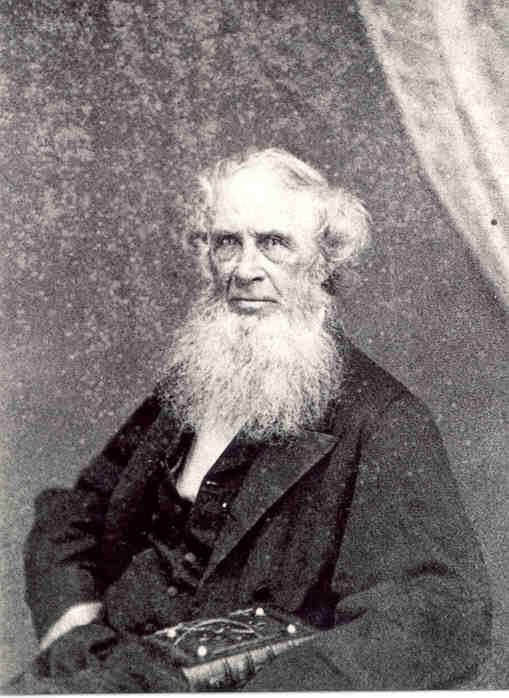
Cyrus Pitt Grosvenor
1792–1879Founder and First President
A leading abolitionist minister and educator, Cyrus Pitt Grosvenor was the driving force behind the creation of New York Central College. Under his leadership, the institution opened in 1849 with a radical commitment to admitting qualified students without distinction of race or sex. His vision shaped the college's mission and its place in American history.
The story of New York Central College was shaped by founders, professors, students, benefactors, and reformers whose influence extended far beyond McGrawville.
Founders & Benefactors
Cyrus Pitt Grosvenor
1792–1879Founder and first president
Abolitionist Baptist minister and leading force behind the creation of New York Central College. Grosvenor helped shape the school's founding commitment to equal education without distinction of race or sex.
Gerrit Smith
1797–1874Abolitionist benefactor
Wealthy abolitionist and reformer whose support helped sustain the college through financial crisis. Smith later became tied to the college's property and debts as the institution struggled to survive.
Biography Forthcoming
The Black Professors
Charles L. Reason
1818–1893Professor of belles-lettres, Greek, Latin, French, and mathematics
Appointed in 1849, Reason is widely recognized as the first African American professor at a predominantly white American college.
Biography Forthcoming
William G. Allen
1820–1888Professor, writer, and abolitionist
A Black professor whose engagement to white student Mary E. King provoked the 1853 Allen–King affair, exposing the violent limits of Northern tolerance.
George Boyer Vashon
1824–1878Professor, lawyer, poet, and educator
An Oberlin graduate and pioneering Black lawyer, Vashon taught at New York Central College after Allen's departure and later continued his work in Black education.
Biography Forthcoming
Students & Alumni
Mahommah Gardo Baquaqua
c. 1824–after 1857Student
Born in West Africa and enslaved in Brazil, Baquaqua studied at New York Central College and later published one of the most important slave narratives connected to the Atlantic world.
Biography Forthcoming
Edmonia Lewis
c. 1844–1907Student
A student of African American and Native American heritage who later became an internationally recognized sculptor in Rome.
Biography Forthcoming
Grace A. Mapps
c. 1835–1897Student and educator
One of the most highly educated Black women of the antebellum era. Her exact degree status requires careful wording, but she became an important educator in Philadelphia.
Biography Forthcoming
Angeline Stickney
1830–1892Student, tutor, mathematician
A graduate of the 1855 class and a gifted mathematician who later became connected to the discovery of the moons of Mars through her work with Asaph Hall.
Benjamin A. Boseman
1840–1881Student, physician, public servant
A student whose later career as a Union surgeon and Reconstruction-era South Carolina public servant shows how the college's influence traveled beyond New York.
Biography Forthcoming
Controversy, Courage & Legacy
Feature Story
The Allen–King Affair
Phillipsville, New York · 1853The engagement of Black professor William G. Allen and white student Mary E. King provoked mob violence near Phillipsville and forced the couple into exile in Britain. The affair exposed the limits of Northern tolerance and became one of the most widely discussed controversies connected to the college.
Mary E. King Allen
c. 1830s–unknownStudent and wife of William G. Allen
Her engagement and marriage to William G. Allen placed her at the center of one of the most explosive interracial marriage controversies of the 1850s.
Biography Forthcoming
Erastus Milo Cravath
1833–1900Student and educator
A former student who later helped carry the ideals of integrated education into the postwar South and became a founder and first president of Fisk University.
Biography Forthcoming
This is a growing public-history archive. Many students and faculty members remain only partially documented in surviving records. Future updates will expand this page as catalogs, newspapers, letters, and local records are reviewed.