William G. Allen
Scholar. Professor. Abolitionist. Exile.
William G. Allen was one of the most remarkable figures connected to New York Central College. A free Black scholar, professor of Greek and German, abolitionist writer, and advocate for equality, he became the central figure in one of the most controversial interracial marriage stories in nineteenth-century America.
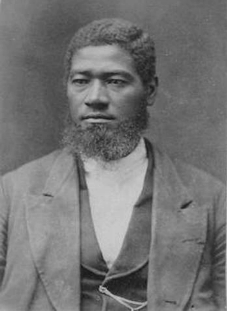
A Professor Before His Time
Born free in the United States in the early 1820s, Allen rose through an era that offered scant welcome to Black intellectual ambition. He studied at Oneida Institute under the abolitionist Beriah Green, steeped himself in classical languages, and became a noted lecturer on the rights of his people.
In 1850, he was recruited to New York Central College and appointed Professor of Greek and German — one of the earliest African American professors at a predominantly white American college. He took his place beside Charles L. Reason in a faculty deliberately assembled to embody the institution's radical vision: that learning belonged to every soul, and that scholarship had no color.
“New York Central College did not merely admit Black students. It placed Black scholars at the head of its classrooms.”
The Allen–King Affair
At McGrawville, Allen met Mary King, a white student and the daughter of the abolitionist minister Rev. Lyndon King. Their friendship deepened into love, and in 1853 they became engaged. To the founders of the college, the engagement was the natural fruit of the equality they preached. To much of the surrounding country, it was an intolerable transgression.
Newspapers from New York to the South seized upon the story. In the nearby hamlet of Phillipsville, a mob gathered, threatening Allen's life and demanding that the engagement be broken. Allen was forced into hiding; friends concealed him and helped him escape under cover of night.
“We had committed no crime; we had only loved one another.”
Exile and Writing
Reunited in New York City, William and Mary were married there in the spring of 1853. Concluding that no place in America would let them live in peace, they sailed for England within weeks of the wedding.
In exile, Allen turned to the pen. In 1853 he published his account of the affair and of the country that had cast him out — a slim, searing volume that remains one of the most important firsthand accounts of race prejudice in antebellum America.
Allen and Mary spent much of the remainder of their lives in England, where he lectured, taught, and ran a small school. They raised children far from the country of their birth, and Allen continued, in writing and in speech, to bear witness to what America had been.
A Forgotten Pioneer
Long before the Civil Rights Movement, William G. Allen argued publicly for racial equality, educational opportunity, and the dignity of interracial marriage. His life reveals both the possibilities and the dangers faced by those who challenged America's racial boundaries before the Civil War.
“The prejudice against color is a prejudice not against the man, but against the principle of human brotherhood itself.”
To recover his name from the silences of the historical record is to recover something of the country New York Central College tried, for eleven brief years, to bring into being.